
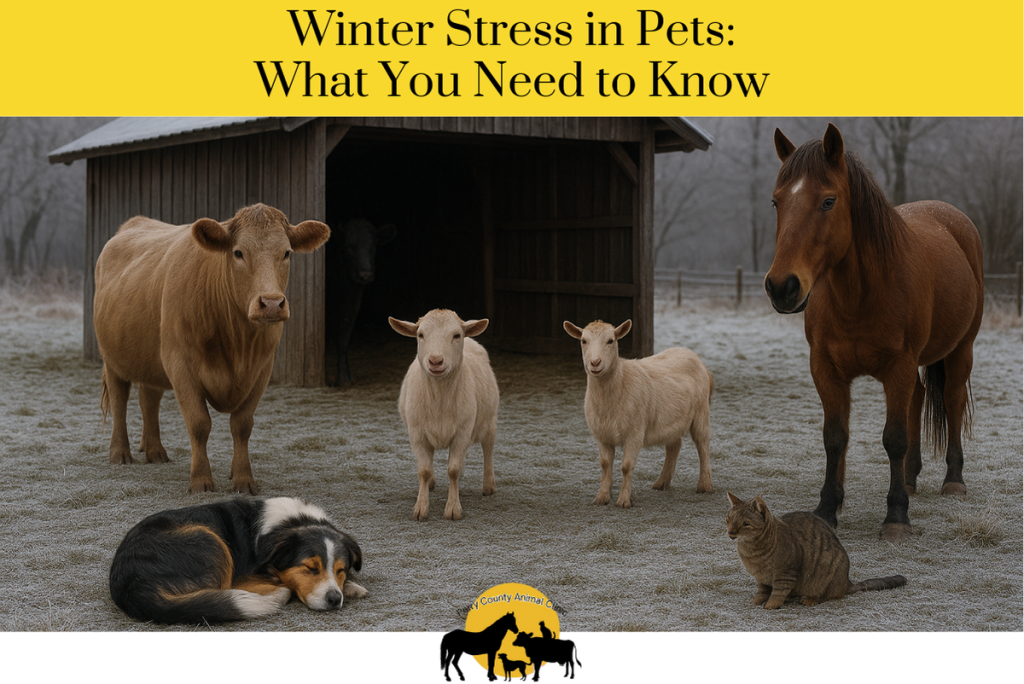
When the temperatures drop and the days get shorter, both large and small animals can experience added stress. For farm animals, colder weather affects nutrition, shelter needs, and immune function. For pets, the winter season can bring changes in routine, increased indoor time, and risks related to cold exposure. At Perry County Animal Clinic, we’re here to help you keep your animals healthy, safe, and stress-free during the winter months.
How Winter Stress Affects Animals
- Cattle, Sheep & Goats: Cold weather increases energy requirements. Without proper nutrition, livestock may lose weight, produce less milk, or have weakened immune systems.
- Horses: Limited pasture availability and colder temperatures can make it harder to maintain condition. Dental issues or poor hay quality can add stress.
- Dogs & Cats: Pets that spend more time indoors may gain weight, while those outdoors risk frostbite, hypothermia, or joint stiffness.
- All Animals: Reduced daylight hours and colder temperatures can alter normal behavior, appetite, and overall wellness.
Tips to Reduce Winter Stress
- Nutrition Matters – Ensure livestock and pets get the calories and balanced diet they need to maintain weight and strength in cold weather.
- Provide Shelter – Dry, wind-protected shelter reduces stress and prevents illness in livestock and outdoor pets.
- Hydration – Keep fresh, unfrozen water available. Dehydration is common in the winter when animals drink less.
- Exercise & Enrichment – Indoor pets still need daily activity to prevent stress and obesity.
- Regular Health Checks – Seasonal exams, parasite control, and vaccinations help prevent winter-related illness.
Q&A: Winter Stress and Animal Health
Q: How do I know if my livestock are stressed in the winter?
A: Signs include weight loss, rough hair coat, reduced production (like milk), or increased illness in the herd.
Q: Can pets really get dehydrated in the winter?
A: Yes. Cold water or ice often discourages animals from drinking enough. Heated waterers or fresh refills help prevent dehydration.
Q: Should my dog or cat get extra food in the winter?
A: Pets that spend more time outdoors may need extra calories. Indoor pets, however, often need fewer calories due to reduced activity. Ask us before adjusting diets.
Q: Do goats and sheep need winter vaccinations?
A: Vaccination schedules continue year-round. Boosters and parasite management are especially important in stressful weather.
Q: When should I call the vet about winter stress?
A: If you notice coughing, nasal discharge, limping, weight loss, refusal to eat or drink, or sudden changes in behavior, schedule an exam promptly.
Contact Perry County Animal Clinic
At Perry County Animal Clinic, we care for your pets and livestock all year long. Winter brings unique challenges, but with proper care and veterinary support, your animals can thrive through the season.📍
📍 366 S Main Street, Lobelville, TN 37097
📞 (931) 589-0005
🌐 perrycountyanimalclinic.com