
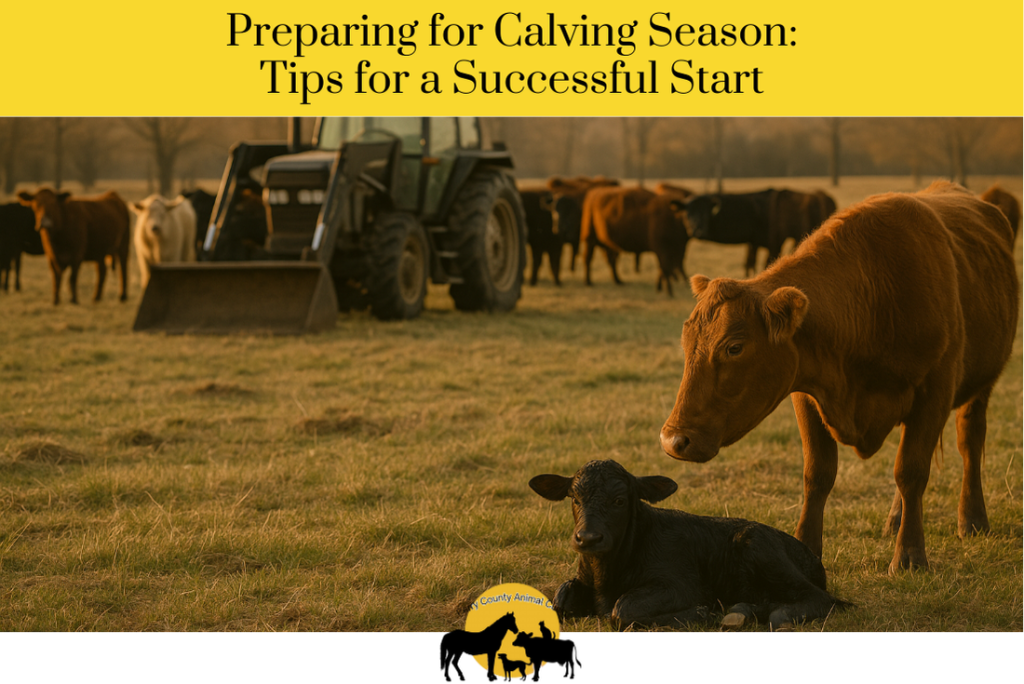
Calving season is one of the most important times of the year for cattle producers. The success of your herd depends on preparation, planning, and proactive veterinary care. At Perry County Animal Clinic, we are here to help ensure that your cows and calves stay healthy and strong through this critical time.
Why Calving Readiness Matters
Proper preparation for calving season reduces calf losses, prevents cow complications, and improves overall herd productivity. A smooth calving season means healthier calves, fewer emergencies, and less stress for both farmers and livestock.
Key Steps to Prepare for Calving Season
1. Nutritional Management
- Ensure cows are on a balanced diet with adequate energy, protein, and minerals.
- Monitor body condition scores—thin cows may struggle during calving, while overweight cows are at risk of dystocia.
2. Vaccinations & Health Checks
- Administer pre-calving vaccines to boost colostrum quality and protect calves from diseases like scours and respiratory infections.
- Schedule a herd health check with your veterinarian.
3. Facilities & Supplies
- Prepare a clean, dry, and safe calving area.
- Stock up on calving chains, OB sleeves, disinfectants, and colostrum replacer.
4. Observation & Record Keeping
- Check cows frequently as their due dates approach.
- Keep detailed calving records for herd management and breeding decisions.
Q&A: Calving Season Preparation
Q: When should I start preparing my herd for calving season?
A: Preparation should begin at least 60–90 days before the first expected calving. This allows time for vaccinations, nutrition adjustments, and facility readiness.
Q: What signs indicate that a cow is close to calving?
A: Swelling of the udder, relaxation of the pelvic ligaments, and restlessness are common signs. Knowing the expected due date also helps with close monitoring.
Q: How can I reduce the risk of calf loss?
A: Proper nutrition, timely vaccinations, and a clean environment are essential. Early intervention during difficult births can also make a big difference.
Q: When should I call a veterinarian during calving?
A: If a cow has been in active labor for more than 2 hours without progress, or if you see abnormal presentations (e.g., only one leg showing), contact your veterinarian immediately.
Q: Should first-calf heifers receive different care?
A: Yes, heifers are more likely to experience calving difficulties. Extra monitoring and proper nutrition are especially important for them.
Contact Us
At Perry County Animal Clinic, we are committed to supporting local cattle producers through every season. If you have questions about calving readiness, need herd health checks, or require emergency assistance, our team is here for you.
Perry County Animal Clinic
📍 366 S Main Street, Lobelville, TN 37097
📞 (931) 589-0005
🌐 perrycountyanimalclinic.com