
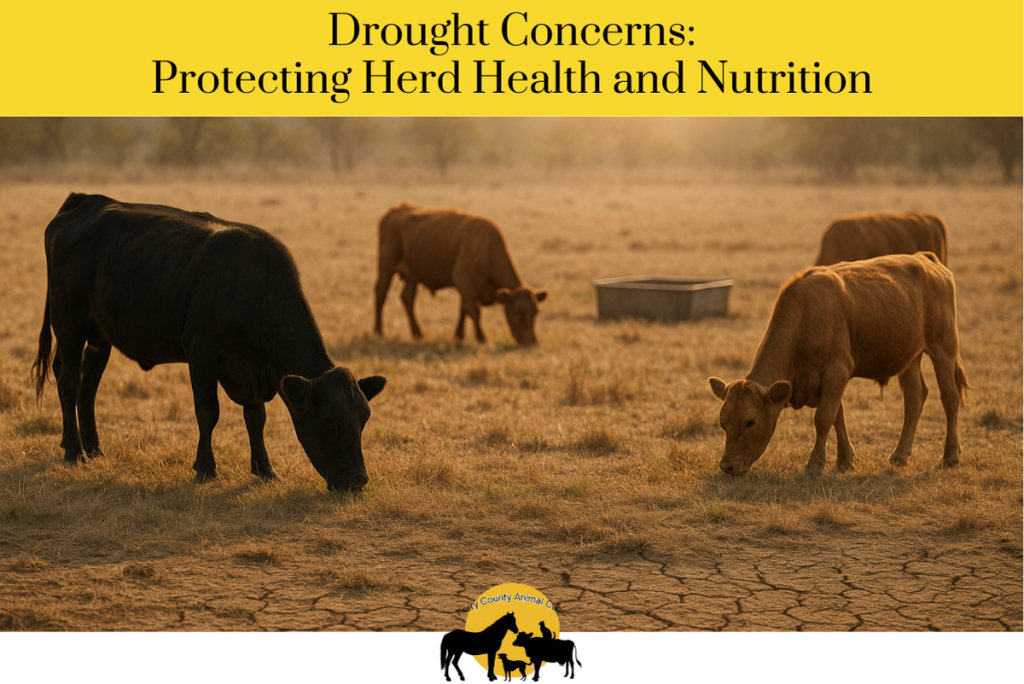
Drought conditions present unique and serious challenges for livestock owners. Reduced rainfall means less pasture growth, lower forage quality, and increased reliance on supplemental feed. These factors can stress cattle and other livestock, affecting productivity, reproduction, and overall herd health. At Perry County Animal Clinic, we understand how vital it is to prepare and adapt your management practices to safeguard your herd during drought periods.
How Drought Impacts Herd Nutrition
During droughts, pasture grasses often become sparse and lose nutritional value. Cattle may not receive adequate protein, energy, or essential minerals, leading to weight loss, decreased milk production, and lowered fertility rates. Without intervention, these deficits can compromise the long-term success of the herd.
Producers often need to rely on stored hay, grains, and specialized supplements. However, hay harvested in drought years is often lower in quality, making feed testing and ration balancing more critical than ever.
Herd Health Considerations
Beyond nutrition, drought impacts herd health in other ways:
- Parasite load: Livestock may graze closer to the ground, increasing parasite ingestion.
- Water sources: Ponds and creeks may dry up, leading to stagnant water that can harbor bacteria and algae harmful to livestock.
- Heat stress: Lack of shade and water intensifies heat-related illnesses.
Working with your veterinarian ensures proactive planning, including parasite control, vaccination updates, and monitoring for signs of stress or illness.
Q&A: Drought and Herd Health
Q: How can I tell if my cattle are not getting enough nutrition during a drought?
A: Watch for weight loss, reduced body condition, decreased activity, and changes in coat appearance. Lactating cows may produce less milk, and breeding performance may suffer.
Q: Should I test my hay during a drought year?
A: Yes. Nutrient levels in hay can vary greatly in drought conditions. A forage test helps determine whether you need protein or energy supplements to balance your herd’s diet.
Q: What are safe supplemental feed options during droughts?
A: Options include high-quality protein tubs, grains, and mineral supplements. It’s important to consult your veterinarian or a nutritionist to ensure rations meet the herd’s specific needs without causing digestive upsets.
Q: How do I manage water quality for my herd?
A: Regularly check ponds, tanks, and troughs for algae, contamination, or low levels. Provide shade near water sources to encourage adequate intake, and consider hauling in clean water if natural supplies become unsafe.
Q: What steps can I take to reduce stress on my herd?
A: Limit unnecessary handling, provide shade or shelter, keep water easily accessible, and maintain consistent feeding practices. Strategic culling of less productive animals may also help conserve resources.
Partner with Perry County Animal Clinic
At Perry County Animal Clinic, we are committed to supporting farmers and ranchers through every challenge—including drought. From herd health evaluations to feed consultation, we provide the veterinary care and guidance needed to keep your livestock healthy and productive.
Perry County Animal Clinic
📍 366 S Main Street, Lobelville, TN 37097
📞 (931) 589-0005
🌐 perrycountyanimalclinic.com
Contact us today to schedule a herd health consultation or forage testing assistance.